
The Value of Garment Production in Europe
When choosing where to manufacture garments, production cost is often one of the first things brands compare. Manufacturing in Asia is generally associated with lower prices, while European production is often considered the more expensive alternative.
But the price per garment doesn’t always tell the whole story. For brands working with smaller collections, technical garments or shorter production cycles, factors such as transport costs, lead times and flexibility can make a significant difference.
Looking at the total cost
A lower manufacturing price can be attractive, especially for large production volumes. But what happens when transport, customs duties, handling fees and storage are added?
For European brands, shorter transport distances can reduce shipping costs and delivery times. For garments manufactured in the EU and delivered to customers within the EU, there are no customs duties between member states.
These factors can make the overall cost difference between European and overseas production smaller than the initial price comparison suggests.
The important thing is to compare the total cost of getting a garment to market, not just the manufacturing price.
Shorter distances and faster deliveries
Manufacturing closer to the European market can make logistics easier to manage.
Shorter transport routes can reduce shipping costs and allow finished garments to reach customers sooner. This can be particularly valuable for seasonal collections, specialized garments and projects with tighter schedules.
Production lead times still depend on material availability, technical requirements and factory capacity. However, reducing the distance between manufacturer and customer can simplify planning and make deliveries more predictable.
Working conditions and European regulations
Another important factor is the regulatory environment in which garments are manufactured.
Within the European Union, common legislation establishes minimum standards for workplace safety, working hours, rest periods and employee rights. Individual countries may also have additional requirements.
This provides a shared legal framework for manufacturers operating within the EU. However, responsible manufacturing still depends on how individual factories work and follow these regulations.
Close collaboration in technical garment production
Technical garment manufacturing often requires close communication between the brand and production team.
Materials, waterproof constructions, seam tape, zippers and other components must work together to achieve the intended performance. During development, adjustments are often necessary.
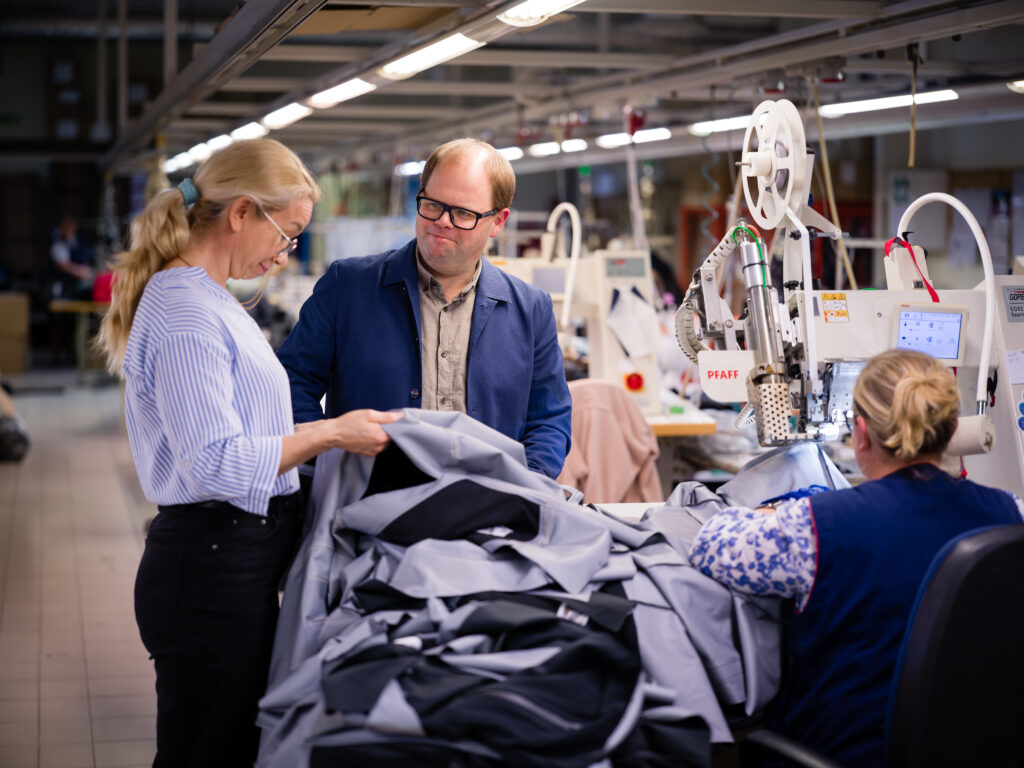
Working with a manufacturer closer to home can make factory visits, sample reviews and technical discussions easier to arrange.
At Tekosom, our Swedish ownership and factory in Poland allow us to combine technical expertise with close collaboration throughout development and production.
Finding the right production approach
There is no single manufacturing location that suits every brand. Large production volumes may benefit from lower manufacturing costs elsewhere, while smaller collections and technically demanding products may have different priorities.
Choosing the right production partner is about looking beyond the initial price and considering the complete process, from development and manufacturing to delivery.